
Financial Tips

With years of hands-on experience in auto retail and vehicle financing, we have put together a few essential tips to help you navigate your next auto loan with confidence.




Quality First:
When financing a used vehicle, prioritizing quality ensures your car outlasts your loan. It’s easy to shop by comparing year, mileage, and price across dealerships, but those numbers don't tell the full story. Before you buy, take the time to inspect what’s under the hood and under the chassis—and make sure you’re dealing with a trusted dealer. A shiny exterior can easily hide costly hidden issues, so always choose transparency and long-term value over a quick deal.

Annual Vehicle Usage (Miles):
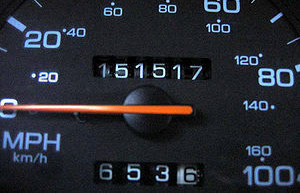
Financing isn't just about getting a low monthly payment. Your loan term and driving habits must work together. If you buy a high-mileage car on a long loan term while driving heavily every year, you run a high risk of major breakdowns while still owing money. This trap often leads to repossession and lasting credit issues. To keep your finances healthy, always match your loan length to expected mileage and aim for lower-mileage vehicles that hold their value when you're ready to trade in.


Understanding Down Payment vs. Loan Value:
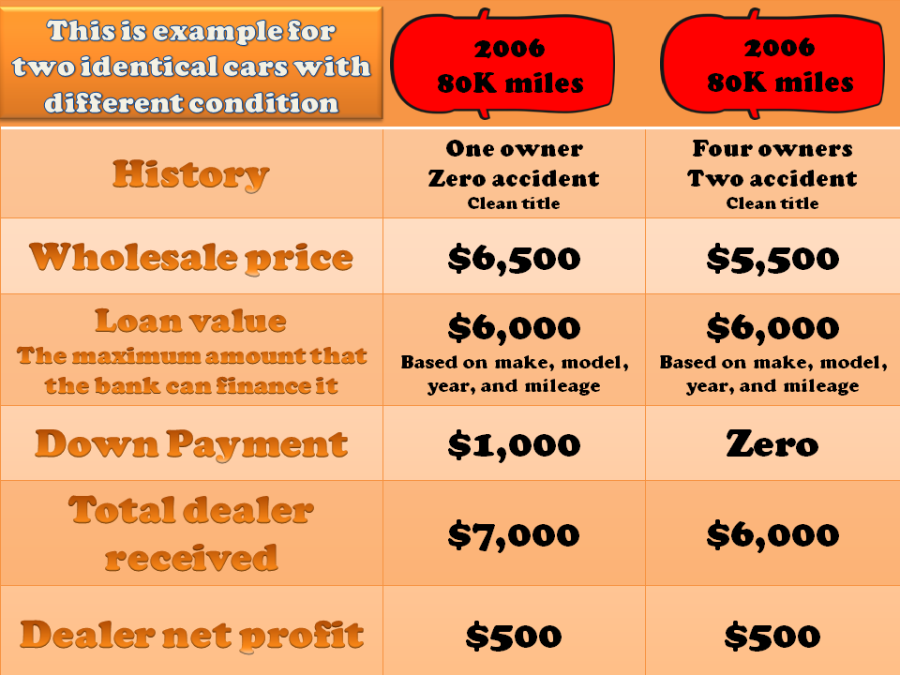
When financing a vehicle, it’s important to look beyond the upfront down payment. Every vehicle has a set "Loan Value", which is the amount lenders agree to finance based strictly on the car’s year, make, model, and mileage.
Your "down payment" is simply the difference between our selling price and that bank loan value, plus any taxes and fees.
-
Why this matters to you: Lenders calculate loan values on paper without inspecting a car’s physical condition. An unusually low down payment elsewhere can sometimes be a red flag that a vehicle was purchased cheaply due to underlying issues. We believe in total transparency—inspecting every vehicle thoroughly so you can buy with complete confidence.


Optional Services & Buyer Rights:
By law, the choice to add optional services or products to your vehicle loan is entirely yours, regardless of what any dealership may tell you.
Please take your time to thoroughly review your Retail Installment Contract before signing. No additional services are mandatory, and you must explicitly sign a separate Disclosure and Agreement for each specific service you choose to accept.
Optional Add-Ons to Consider
-
Vehicle Service Contract (VSC / Warranty): Optional. While service contracts offer peace of mind, we encourage you to shop around, as you may find better or more affordable coverage outside the dealership.
-
GAP Insurance (Guaranteed Asset Protection): Optional. Highly recommended if you are financing a significant portion of the vehicle, as it protects you financially if the car is totaled or stolen.
-
GPS / Starter Interruption Devices (SID): Optional. We value your privacy and peace of mind—we do not install tracking or ignition-disabling devices on any of our vehicles.


GAP insurance:
Guaranteed Asset Protection (GAP) Insurance
GAP insurance covers the financial "gap" between your vehicle’s actual cash value and the remaining balance on your auto loan. If your car is stolen or totaled in an accident, your standard insurance only pays what the vehicle is currently worth—which is often less than what you owe. GAP insurance pays the difference so you aren't left paying for a car you can no longer drive.
-
Drive with Peace of Mind: Protect your personal finances against unexpected total losses.
-
Lower Upfront Costs: GAP coverage gives you the flexibility to put less money down without taking on extra financial risk.


Protect Your Investment:
Eliminate unexpected repair costs and drive with total confidence. Our flexible Vehicle Service Contracts (VSC) let you start with short-term coverage—like 3 or 6 months—to ensure your vehicle runs flawlessly. Once you experience the peace of mind, you can easily extend your contract for long-term protection.


Understanding Reliability Rating:
Smart Buying Starts with Research
Most vehicles on the market have well-documented mechanical patterns and known points of failure. We strongly advise every customer—especially those shopping on a tight budget—to do a little homework before financing a vehicle. Checking reliability ratings and reading verified owner reviews can save you thousands down the road.
When researching, pay close attention to two key factors:
1- Severity: Is the common issue a minor inconvenience or a major breakdown?
2- Frequency & Repair Cost: Is it an occasional cheap fix, or a widespread, expensive repair?
Minor Fix vs. Major Failure
Not all mechanical issues are created equal. Here is how to distinguish between a manageable maintenance item and a financial risk:
|
Vehicle |
Common Known Issue |
Approx. Part Cost |
Approx. Labor Cost |
The Verdict |
|---|---|---|---|---|
|
Car A |
Knock Sensor Failure |
~$26 |
~$65 |
Manageable Fix — Inexpensive, straightforward repair that won't break the bank. |
|
Car B |
Transmission Failure |
~$1,000 |
~$450 |
High Risk — Major repair cost that could leave you stuck with a huge bill. |
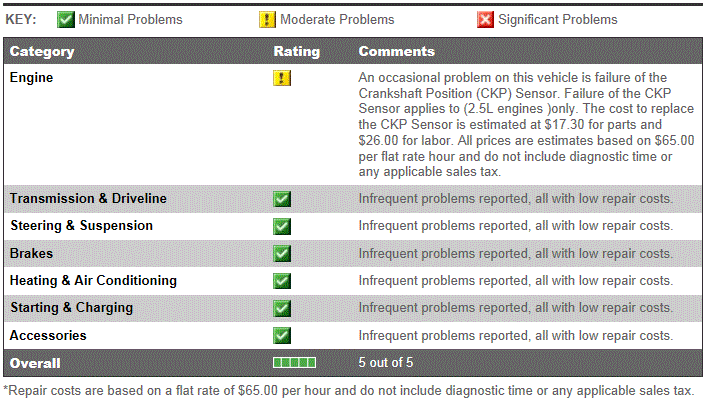
Example for good (reliable) vehicle:
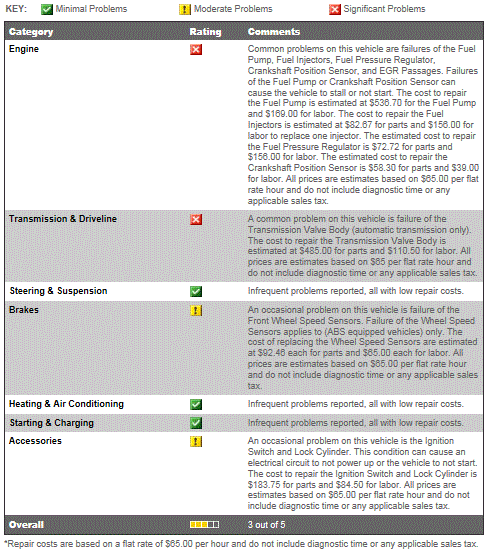
Example for bad (unreliable) vehicle:

How Buy Here Pay Here Works vs. Standard Financing:
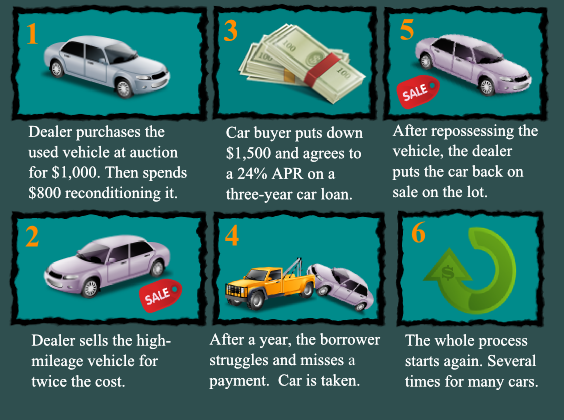
When shopping for a pre-owned vehicle, understanding your financing options is just as important as choosing the right car. While Buy Here Pay Here (BHPH) lots promise easy approvals, the way they operate often works against your long-term goals.
Why Choose Traditional Financing Over "Buy Here Pay Here"?
|
Feature |
Buy Here Pay Here (BHPH) |
Our Financing Approach |
|---|---|---|
|
Credit Bureau Reporting |
No — Payments are handled in-house and rarely reported. |
Yes — Payments are reported to major credit bureaus. |
|
Credit Rebuilding |
Does not help build or repair your credit score. |
Helps rebuild or establish credit history with every on-time payment. |
|
Vehicle Selection & Quality |
Often restricted to higher-mileage, older inventory. |
Fully inspected, reliable inventory tailored to your budget. |
|
Interest Rates & Terms |
Often maximum allowed APRs with rigid weekly/bi-weekly payments. |
Competitive market rates from established lenders with predictable monthly terms. |
Here is how BHPH really works—and why traditional dealership financing offers a better path forward:


Maintenance & Cost to Own:
Smart Financing Means Looking at the Big Picture.
When budgeting for your next vehicle, remember to factor in long-term maintenance, gas, and unexpected repairs alongside your monthly loan payment. Ensuring these costs fit comfortably into your overall budget keeps your vehicle reliable and your financial plan on track.


Calculate Your Cost Per Mile:
When shopping on a strict budget, the best value isn't always the newest year model—it’s the vehicle that delivers the lowest cost per mile of remaining life.
Imagine you're comparing two vehicles with the exact same price and monthly payment:
-
Option A: A 2020 model with 145,000 miles
-
Option B: A 2012 model (same make/model) with only 65,000 miles
While Option A is eight years newer, Option B gives you roughly 80,000 fewer miles of wear and tear. That lower mileage translates to significantly more potential road life ahead, lower immediate maintenance costs, and a much lower cost for every mile you actually drive.
When every dollar counts, prioritize remaining mileage and maintenance history over the year on the bumper.


Wants vs. Needs:
Before you commit to financing a vehicle, ask yourself: "Is this a want, or is this a need?"
Drive away with a payment you feel comfortable with by focusing on what you actually need:
-
Assess Your Usage: Don't pay a premium for features or utility you won't use—like financing a full-sized truck for simple city driving.
-
Know Your Budget: Choose a vehicle that aligns with your true affordability, keeping monthly payments, fuel, and insurance manageable.
-
Get the Right Fit: Pick the vehicle that works for your day-to-day life, not just your preference.


 Print
Print